
pop up description layer


The Unconscious World of Dream
The Psychology of Dreams - A Jungian Perspective
A Simple Guide to Dreams
Next: How to Remember Your Dreams

Also Read: Who Is Carl Jung?

What Are Dreams?
Dreams are mental activities occurring during sleep. Most dreams occur in conjunction with rapid eye movements; hence, they are said to occur during REM-sleep, a period typically taking up 20-25% of sleep time. The act of dreaming is physical. The contents of our dreams are Psychological.
Dreams are therapeutic. Carl Jung saw the dream as the unconscious which contains all we need to know about the causes of our psychic troubles; it can tell us why we are as we are - victim or martyr, sexually impotent, neglected child looking for love, etc. - but it also can provide insights to the remedy for the psychological disorder.
The unconscious, through the dream, is not concerned merely with putting right the things that have gone wrong in us. It aims at our well-being in the fullest possible sense; its goal is nothing less than our complete personal development, the creative unfolding of the potentialities that are contained in our individual destiny. Not just healing but wholeness.... more on 'What Are Dreams'


The Language of Dreams


What Are Dream Symbols & How Do They Work?
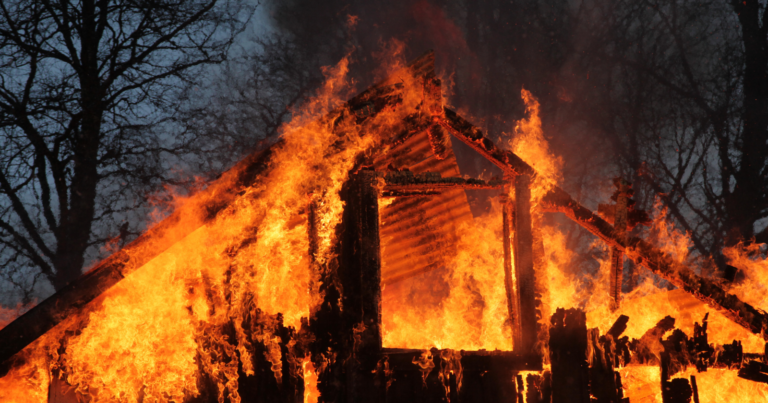
Dreams use symbols and metaphor as its common language, with literal associations being confined to close relationships in the dreamer's life. Dream symbols are the images that are featured in a dream. A house, your car, the President of the United States, an axe murderer, etc., these are symbolic references that address emotional aspects of the dreamer's life. Most dream symbols are not to be taken literally, but rather metaphorically. For instance, a burning house would represent the dreamer [the house] and the fire would be the passion, anger, desire or bodily fever. These symbols represent the unconscious emotional and/or physical state of being of the dreamer. Symbols point to the emotions and instincts, many of which are hidden or repressed and are stored in the unconscious mind where they reside until some stimulus brings them to consciousness.
There is no fixed meaning to any dream symbol, it all depends upon the individual as to its true meaning. To help you understand the
metaphorical meanings of symbols see Dream Symbols & Their Meanings and Common Dream Motifs

What Is A Metaphor?
A metaphor is where one thing is spoken as if it were another. The house in a dream is most often a metaphor for the dreamer, the house being a representation of the dreamer. The house would represent the dreamer's psychological, physical and/or spiritual condition, a proxy for the complexes. In most instances you should take dream symbols as metaphorical references to the dreamer's condition and not a
literal interpretation, to fully understand the message in the dream.
An Example: a dream where you see your mother's house on fire doesn't literally mean that your mother's house is on fire. The house is the dreamer and the fire is an emotional association to the dreamer's mother {or the mother represents some other metaphorical reference}.


How Are Dreams Structured?
There is no 'one' defining theory of dream structure. But Jung supposed the majority of dreams are composed of four parts or phases, pretty much as in a drama play performed before an audience. The dream is very much like your life on stage, and you are the director, actor and witness. First we need to figure out the scene and time of dream as well as dramatis personae { the actors in a play}. In first phase, which can be regarded as the exposition, the initial situation (setting) is represented – already pointing at central conflict expressed in dream.
Example: The dream starts out, "I'm in my mother's house". Or "I am riding on an out of control train".
The second phase is the plot and contains something new (essential change), which leads the dream in the third phase: the culmination. In this phase the most critical things happen, which bring the dream to a closure: the fourth phase or denouement. Jung attributed extraordinary significance to the end of dream. The end of dream is so important, Jung held, because we cannot consciously influence on the outcome (i.e. change the end), and dreams so reflect the real situation.
Jung: "Nature is often obscure or impenetrable, but she is not, like man, deceitful. We must therefore take it that the dream is just what it pretends to be, neither more nor less. If it shows something in a negative light, there is no reason for assuming that it is meant positively."

According to the end of dream, Jung discriminated between favourable and unfavourable dreams. If we were to reverse the well-known proverb, then for dreams we may say that a good end makes a good beginning. Favourable dreams have quieting effect and direct us to the most constructive ways of solving problems. On the contrary, unfavourable dreams contain a warning of, perhaps life important, negative changes. Hence dreams can be said to have a prospective function; they warn us about bright or dark future. Favourable or unfavourable end of dream, however, must not be taken as a final and absolute meaning of dream. This can be done only after several interconnected dreams.

Even though Jung found the structure of dreams as described above, he warned not to take this as literal law. Look at the whole dream [and subsequent dreams] to determine what the dream message is.

Note: I have found that the structure of most dreams do follow the above outline. You can observe this for yourself at the Dream Forum.

What Are Archetypes?
Dreams are also an expression of collective generic experiences, which refer to basic life problems and manifest in terms of symbols and myths – thoughts and memories shared by all humanity. The interpreter of dreams must therefore be familiar with various myths, religions, cults, rituals and fairy tales in order to fully understand the meaning of dreams. These mythological motifs, which can be found in dreams, Jung called archetypes. Archetypes or primordal images are "specific forms and pictorial relationships, which did not only consistently appear in all ages and in all latitudes, but also appear in individual dreams, fantasies, visions and ideas." This observation led Jung to think that there exists collective unconsciousness – the sum of all experiences that human race acquired in its phylogenetic development. The access to collective unconsciousness is particularly easy, when a person has to take an important decision or is in life situation, crucial for his/her personal growth. S/he gets a suggestion from the collective unconsciousness in form of archetypal situation. If that happens in dream, then such dream is called the big dream, which "is expressed in language of universal human experiences, condensed in rich, vivid symbols, in eternal ancient images that [sic] overwhelm us completely." Wide knowledge is required when interpreting the big dreams. This knowledge, however, cannot be simply memorized; it can only be an insight into experiences of the person who uses it.
more on Archetypes.


Masculine/Feminine Aspects
Every man has a feminine component in his psyche; every woman has a masculine component in hers. Jung called these aspects the anima/animus aspects of the psyche. In dreams the anima, or feminine aspects of a man, would be in the form of the woman. The animus would be seen as a man in a woman's dreams. Unfortunately, for centuries, and particularily in the western world, it has been considered a virtue - 'the done thing' - for men to suppress their femininity; and until very recently women have been socially conditioned to think it unbecoming to show their masculinity. One result of this has been man's treatment of women. Man's fear and neglect of his own femininity have had dire consequences. Not only has he repressed the femininity in himself; but also, being frightened of women - who are 'the feminine' par excellence - he has suppressed them, kept them subordinate and powerless.

From a Jungian point of view, masculine and feminine are not alien to one another because we are not limited to one or the other end of a polarity. At the level of the Soul, there are no opposites. The deep self carries the potential for both sides of every polarity. We may develop an outer personality that manifests one end of a set of polarities, but we also have within us an underdeveloped counterpersonality that manifests the opposite end of that same set of polarities. For someone whose personality is mostly masculine, the counterpersonality is referred to as the anima. For an individual who manifests more feminine, the counterpersonality is their animus.
more about the anima/animus aspects

The 'Shadow' in Dreams
The Shadow is always the same gender as the individual. The Shadow is considered to be a collection of inferiorities, undeveloped, and regressive aspects of the personality. They are primarily of an emotional nature and have a kind of autonomy, displaying an obsessive or more accurately a possessive quality. These aspects are generally associated with projections. Projection is defined as "the situation in which one unconsciously invests another person (or object) with notions or characteristics of one's own.

In dreams your shadow may be represented either by some figure of the same sex as yourself (an elder brother or sister, your best friend, or some alien or primitive person) or by a person who represents your opposite (and of the same sex). A clear example of this in literature is Robert Louis Stevenson's 'The Strange Case of Dr Jekyll and Mr Hyde', in which Mr Hyde may be seen as Dr Jekyll's unconscious shadow, leading a separate and altogether different life from the conscious part of the personality. The werewolf motif features in the same way in literature (e.g. Hermann Hesse's 'Steppenwolf') and in folklore. In pre-literate societies this 'other' side of the individual's personality was sometimes depicted as a 'bush-soul', having its own separate body - usually that of an animal or tree in the nearby bush or forest. (It should be noted that in such preliterate society the bush or forest or other wide or desert places surrounding the human settlement were powerful symbols of anti-anomianism, that is, of everything that constituted a threat to the established law and order in the human community. There is an obvious parallel here to the way the dark forces of the unconscious may be felt as a threat to the ordered life of the conscious ego).

Cinderella is a shadow figure. She is ignored and neglected by her elder sisters. They go out into the world, but Cinderella is shut up indoors. This represents the contrast between the conscious ego (which relates to the outside world) and those parts of the unconscious that have not been allowed any part in one's conscious activity. However, Cinderella eventually escapes from her imprisonment and marries the Prince. This marriage symbolizes the joining together of conscious ego (Prince) and shadow (Cinderella), which is the end result of the penetration of the conscious mind by the unconscious and/or the penetration of the unconscious by consciousness. Symbolically - in myths and in dreams - consciousness is usually represented as male, the unconscious as female; and the sexual penetration of female by male is therfore a common symbol of the descent of consciousness into the dark cave-like depths of the unconscious. (Here is a splendid example of the difference between Freud and Jung: whereas for Freud all - nearly all - dream images were symbols of sexuality, Jung asks us to entertain the possibility that the sexual act itself may be a symbol pointing to something beyond itself.)
more about the Shadow

Dreams Have More Than One Meaning
Jung tells us that dreams do have more than one meaning. This has to do with the personal and collective unconscious, the first having to do with the dreamer's ego life, the discerment of the everyday adventure of the ego
{centric} life. These dreams are more common with younger people {ages birth to 40 years old}. But older people alos have an ego aspect and such dreams may address these waking conditions as well as deeper emotional baggage from past experiences. The dream symbols would actually address both aspects of the dreamer's life using the same metaphors.
Then there is the deeper aspects of the dreamer's life. These dreams usually occur during major transitions or changes in life. The collective unconscious, which is rich in symbol and metaphor, is older than the individual and indeed older than consciousness:
it consists of 'the whole spiritual heritage of mankind's evolution born anew in the brainstructure of every individual. They are instinctive much in the way a turtle knows to go to the water when first hatched. The representation of a symbol in the personal unconscious points to the anxieties of everyday life whereas the collective unconscious addresses the deeper sense of who we are, the true self often disguised in the ego-life, a spiritual and creative being that inhabits our psyche. These dreams have more to do with meaning and spiritual and creative aspects and are more common in older people's dreams. Jung tells us we can not be fully whole until we recognize these 'collective' aspects', confronting the shadow, and make them a part of our everyday lives.


Do Dreams Predict Future Events?
No, and perhaps. According to Carl Jung dreams compensate the waking mind with information that is unconscious - repressed, hidden or forgotten. His theory is that the dream wants to balance the dreamer's life by providing information that anwsers questions to why things are the way they are in the dreamer's life.
As an example, a person who has a sexual addiction most often was physically or mentally abused as a child or young teen and the painful emotions are hidden in the unconscious so they do not have to be dealt with. Although these events may be repressed, they influence the dreamer throughout their life, unless they are confronted and properly dealt with. A purpose of dreams is to bring these repressed emotions to consciousness so a healing can take place. Only then can a person be live a happy and structured life, with a purpose and positive attitude. The unconscious dream compensates the conscious mind with this information using motifs and metaphor. Metaphor is used as the language of the dream because it was the primitive mind's way of communicating, using symbols of people, animals, places, events, and has been inherited by the collective psyche of all humans. These are also what Jung called archetypes. {universal symbols}
Predicting the future? Dreams do at times show us insights to possible events in the future. But it is as much a caluation of what the mind and body already knows than a supernatural event. The brain is the ultimate super computer. The body is able to communicate illness and disease through the dream, informing a person well before it is detectable by medical means. There are, and throughtout history have been men and women who were 'good' at seeing future events, but when you deeper into these predictions they are as much a general thought than true predictions of the future. Intuitiveness is a form of knowing, a known quality of the psyche that let's someone sense 'truths' about someone, thing or event. So why not the dream using related aspects to inform, if only in on occassion. The science of dreams {psychology}, through Jung and others, have shown us there are metaphysical qualities to the human psyche. It is probably best to be skeptical, but never dismissive.[See Nostradaumusand Edgar Cayce.]


What Does Death Mean In A Dream?
Here is an example of where symbols taken literally can cause much pain and stress, all for naught. Death in a dream has many possible meanings, a real death seldom being one of them. Here are some possiblilties to the meaning of dead, dying and death in a dream:

[1] A dead person in a dream who is actually a living person, may represent some unconscious resentment toward that person. [2] If the dead person is you it may be your own anxiety about dying. [3] If the dead person is someone you know and is actually deceased he/she may becoming back not to haunt you [which is also a possibility if there is some guilt about your relationship with that person] but to inform you of your need to move on with your life. [4] If the dead person in the dream is you it may represent a need to leave the old self behind [guilt and negative feelings] and move on to better things. [5] A dead animal almost certainly refers to some part of you - an instinctive force perhaps - that needs to die because of the negative effects that it produces in your waking life. [6] Death often symbolizes changes in life. Changing jobs, getting a divorce, moving to another city, all represent the death of old habits and way of life [the death and resurrection motif]. With every death there is a new birth; the new job, new home, new relationships. Treat death in a dream as getting rid of negative emotions and replacing them with positive ones. [7] If gender is stressed in the dream, the meaning may be that your masuclinity/femininty or your anima/animus needs reviving.


Next: How to Remember Your Dreams
A Short History of Dreams
Ancient Egyptian Theories - Greek Philosophy on Dreaming - Roman Ideas - Biblical Visions - Middle Eastern Dreamers - Europeans and Dreaming - Modern Philosophies ....more

More On Jung's Dream Philosophy
....The Shadow-Our Dark Side?
....Personality Types & Theories
....Sleep & Sleep Disorders

We can build you a site as detailed as Myth-Dreams-Symbols and teach you how to maintain also. Click here for details


Have A Comment or Question?